
Ask the Expert: Mike Johnson Explains How an SEM Can Solve Complex Problems
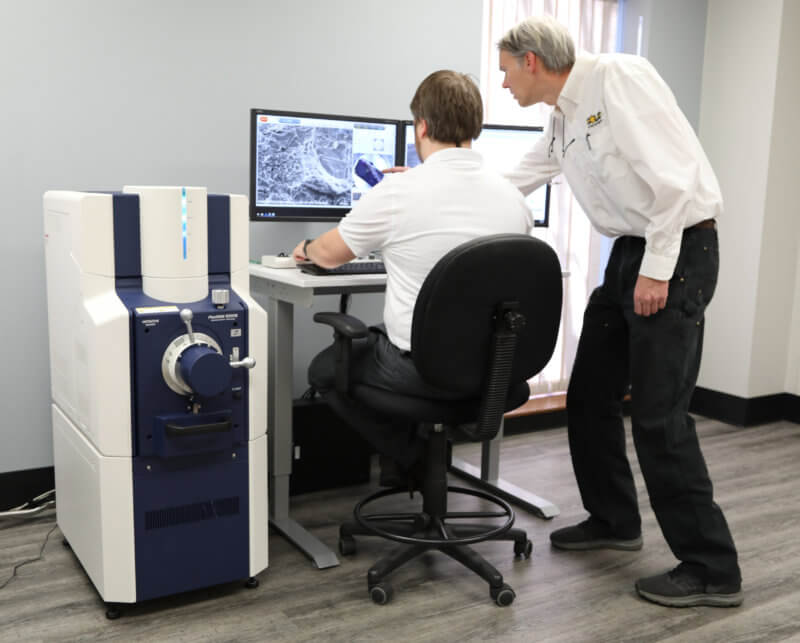
Scanning Electron Microscopy (SEM) with Energy Dispersive Spectroscopy (EDS) is an invaluable tool in examining surface anomalies in vacuum heat-treated metal parts. Mike Johnson, Solar Atmospheres of Western PA’s Sales Director, explains how this tool can answer questions and solve complex problems.
1. What is a Scanning Electron Microscope (SEM)?
A Scanning Electron Microscope is a fine tool that uses a focused beam of electrons to examine a material’s surface. When the electrons interact with the sample, they produce signals that are detected and analyzed. These signals reveal detailed information about surface features and chemical composition, making SEM a highly effective tool for microscopic evaluation.
2. My medical component shows spotting after vacuum heat treatment—how can SEM help identify the root cause?
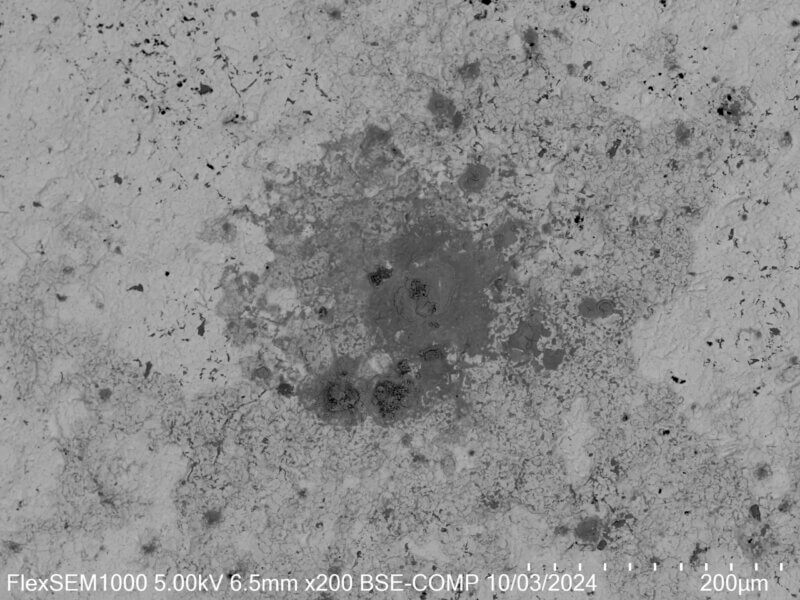
SEM analysis identifies the composition of contaminants within the spots, helping trace their origin. It can reveal whether the issue stems from manufacturing processes—such as machining fluids, cleaning fluids, grinding residue, or metal chips—or from handling contamination like glove fibers or environmental debris.
3. What is the most common source of contamination identified through SEM analysis?
A frequent source of surface contamination is the cleaning process (used) prior to heat treatment. While components may arrive at the heat treater visibly clean, SEM often detects residual cleaning or rinsing agents. These frequently include Chlorine, Calcium, and other residuals commonly found in city water. If aqueous cleaning methods are employed, the final rinse should always be performed with deionized water to avoid this potential contamination. The SEM may also uncover films or deposits caused by cross-contamination when multiple alloys are cleaned in the same system. For instance, analysis of spots on 304 stainless steel components once revealed copper contamination from foreign object debris (FOD). The cause was found to be cross-contamination in a cleaning system shared with copper components.
4. Can the vacuum furnace itself be a source of FOD surface contamination?
Yes. Furnaces may contribute to surface contamination of heat-treated parts. If your heat-treat supplier is equipped with an SEM, this is a sign they understand the science and intricacies of surface contamination, and they have the necessary tool to get to the root cause of the issue, whatever that cause may be.
Foreign object debris and residual contamination can impact the performance and reliability of vacuum heat-treated components. While initial detection may rely on visual inspection, SEM/EDS analysis produces precise compositional analysis for fast and efficient root cause analysis. Please contact me if you are interested in SEM analysis at Solar Atmospheres.

Learn more about Scanning Electron Microscopy
And featured in Today’s Medical Developments Magazine: https://www.todaysmedicaldevelopments.com/article/questions-mike-johnson/